Bifold Doors or Sliding Doors for Luxury Homes?
When planning a luxury home extension, new build or barn conversion, choosing between bifold doors and sliding doors can have a major impact on how your home connects with the garden. Both options bring in natural light and create a strong sense of connection between indoor and outdoor spaces, but they work in different ways.
For luxury homes, the right choice is not simply about appearance. You also need to consider how much of the opening you want to use, how you will ventilate the room, the views you want to preserve, available space and how well the doors will cope with the Lancashire weather.
Here are some of the key points to consider before making your decision.
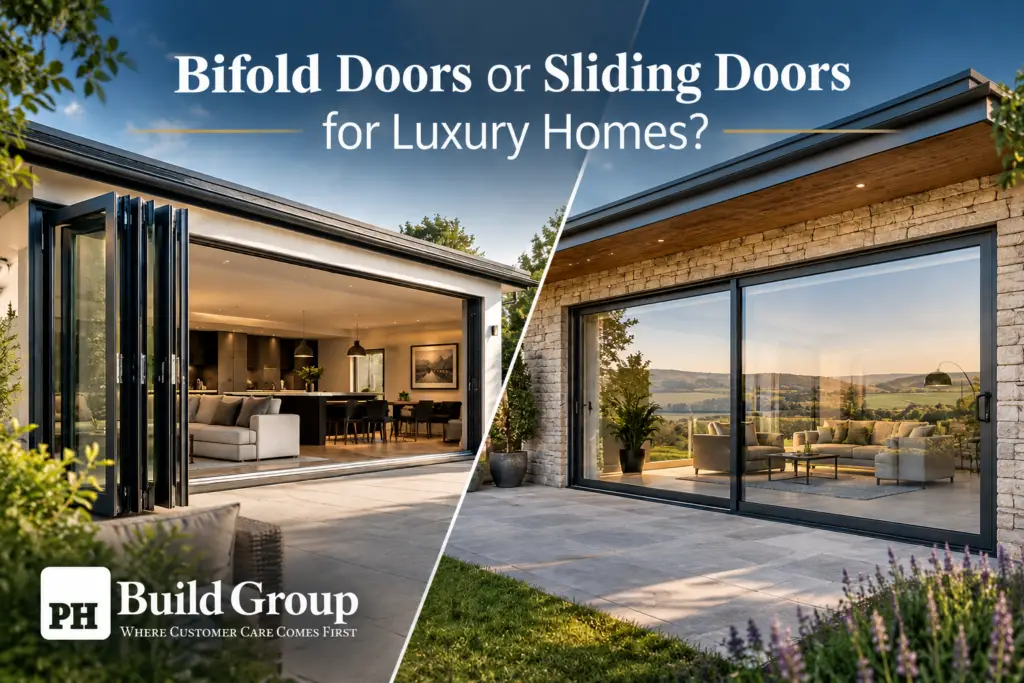
Bifold doors create a wider opening
One of the biggest advantages of bifold doors is the amount of the opening they can make available. A well-designed bifold system can open up around 90% of the aperture, creating a generous connection between the house and garden. This can work particularly well for open-plan kitchens, dining areas and living spaces where you want the garden to feel like an extension of the room.
Sliding doors typically open between around 50% and 65% of the aperture. While this provides less of a completely open connection, the large panes of glass can create a clean and contemporary appearance when the doors are closed.
Think about how you are likely to use the room. If entertaining outdoors and creating a large opening to the garden are priorities, bifold doors may suit the design. If you want large areas of glazing while keeping the overall appearance simple, sliding doors could be worth considering.
Sliding doors can provide a clearer view
For properties with an attractive garden, landscaped grounds or countryside views, the glazing itself can be just as important as the opening.
Sliding doors can provide a more uninterrupted view because they typically use larger panes of glass with fewer vertical frames across the opening. Bifold systems are made up of several door leaves, meaning there are more frames within your sightline when the doors are closed.
That distinction can be particularly important for luxury homes where the surrounding landscape is part of the overall design.
It is worth considering the view from inside the property as well as how the doors will look from the garden. The right choice should complement the architecture rather than simply follow a particular trend.
Consider ventilation and everyday use
Your doors do not always need to be fully open. On a warm day, you may simply want to let some fresh air into the room without opening up the entire garden elevation.
Sliding doors can offer useful flexibility because they can be opened as far as needed for ventilation. With bifold doors, the design will determine how easily you can make a smaller opening, although opening a single door leaf is often the minimum option.
It is also worth considering whether your bifold doors include a traffic door. This is a single door leaf that can be opened independently, without having to unlock and open the rest of the bifold system. It effectively works like a conventional back door, making it convenient when you simply want to step outside quickly.
For a busy family home, these small details can make a noticeable difference to everyday use.
Think about space, opening direction and thresholds
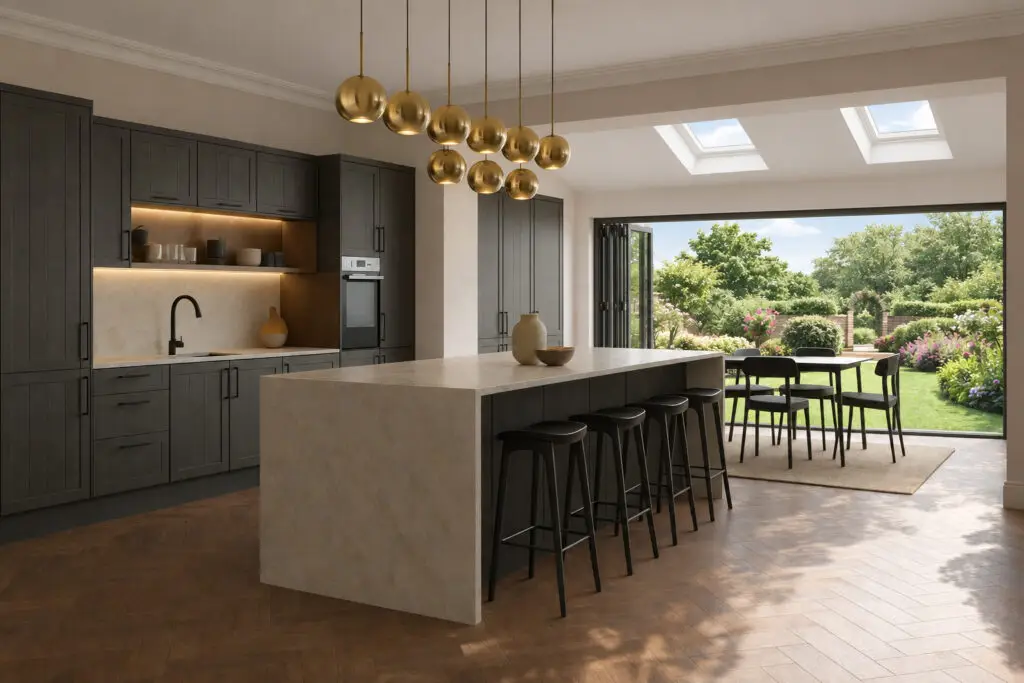
Before choosing bifold doors, look carefully at the space immediately around the opening. Bifold leaves need room to fold and stack, so furniture, planting and other features should be considered during the design stage.
Depending on the system, the leaves can stack to one side, both sides, and may open inwards or outwards. Outward-opening bifold doors are commonly chosen because they reduce the risk of rainwater dripping into the house when the doors are opened after wet weather.
The threshold is another important consideration. A flush threshold creates a continuous floor between the interior and exterior, which can give a beautifully seamless finish. However, there is a balance between achieving a low threshold and providing effective resistance to drafts and weather.
Higher thresholds can offer better weather performance, while intermediate options can provide a practical compromise between accessibility, appearance and protection from the elements. The exposure of the property should therefore be considered when selecting the door system.
For projects in Lancashire, where the doors may be exposed to wind and heavy rain, this is something that should be discussed during the design and specification process rather than treated as an afterthought.
Don't overlook maintenance
Large glazed doors are an important feature in many luxury homes, but they also need to work reliably for years to come.
Keeping the tracks clear of dirt and debris is particularly important for both bifold and sliding doors. Regularly vacuuming the tracks as part of your normal cleaning routine can help keep them operating smoothly.
The design of the track is also worth considering. Some sliding systems have wheels positioned within the track, with much of the track covered by a cap. These designs can be more difficult to clean, and accumulated dirt or water can potentially affect how the wheels operate.
Good design is about more than how the doors look on completion. Ease of use, maintenance and long-term performance should all form part of the decision.
Which doors are right for your luxury home?
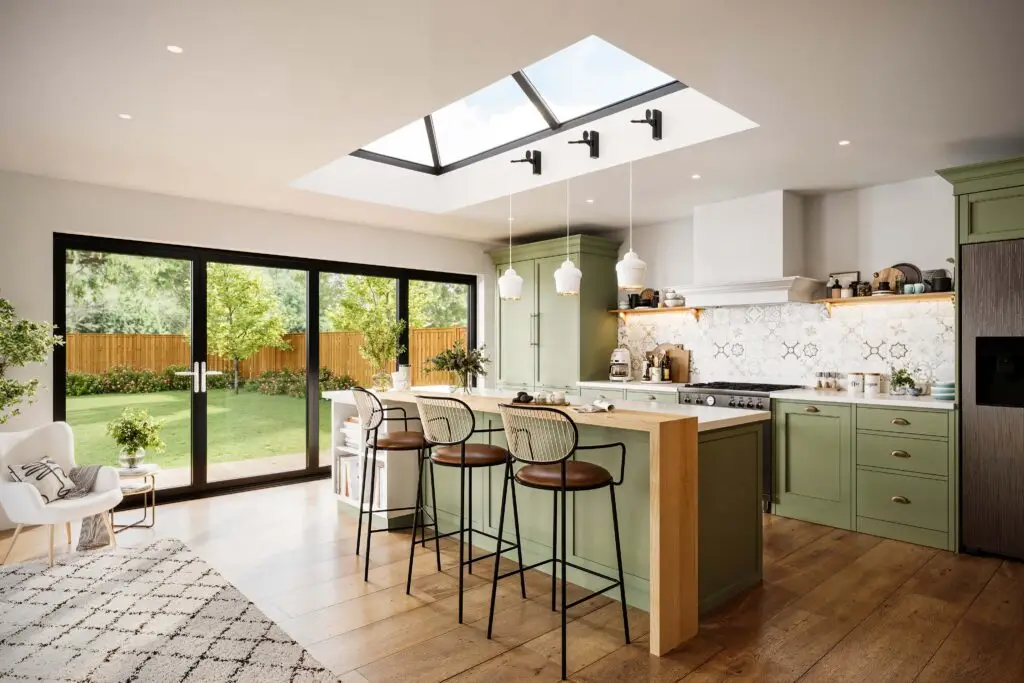
There is no single solution that works for every property. Bifold doors can be a strong choice when your priority is creating a wide opening and making the garden feel like a natural continuation of the living space.
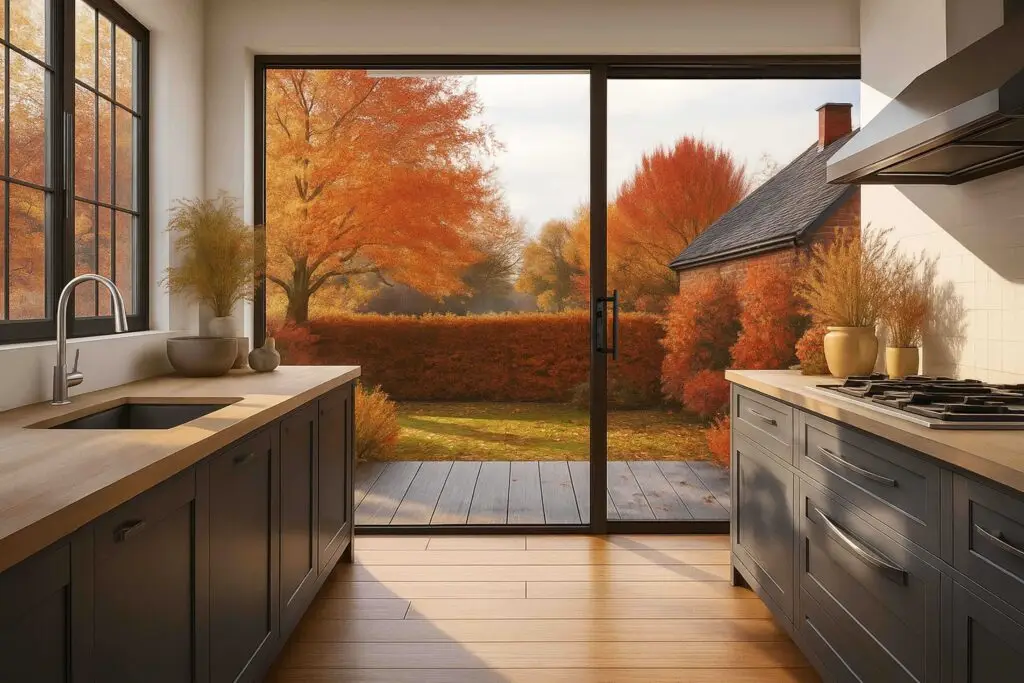
Sliding doors, meanwhile, can be particularly appealing where uninterrupted views, large areas of glazing and controlled ventilation are important.
The best option will depend on the architecture of your home, the size and orientation of the opening, how you use the room and the external space available around the doors. These decisions are best made as part of the wider building design, rather than selecting the doors in isolation.
At PH Build Group Ltd, we work with homeowners across Ribble Valley and Lancashire on luxury home extensions, barn conversions and new-build homes. Careful planning at the design and construction stage helps ensure features such as large glazed doors work with the building as a whole.